Quellow
Delivery apps changed how people order. They also inserted themselves between restaurants and customers. The commission is the obvious cost, but the less obvious one might be bigger: when someone orders through an app, the app owns that relationship.
This doesn't mean you should quit the apps. It means you should know what each channel is for.
What delivery apps do well
Marketplaces are effective at discovery. They put you in front of people who've never heard of you, and they handle drivers. For a new restaurant or a new neighborhood, that can be worth paying for.
Where they cost you
- Commission. Check your own statements for what you actually pay per order, including marketing fees.
- Customer data. You generally don't get contact details, so you can't invite them back.
- Brand. You appear in a list beside competitors, often with a discount banner next to you.
- Errors. A problem with a driver can still become a bad review for you.
What direct ordering gives you
When a customer orders on your website, you keep the relationship. You know who they are and what they like, and you can reach them with their permission.
Direct orders aren't free. You'll still pay card processing fees and arrange delivery if you offer it. But there's no marketplace commission on the order, and the customer stays yours.
Do the math on your own orders
As an illustration only, take a $30 order with an assumed 25% commission:
- On an app: $7.50 goes to commission.
- Direct: the same order pays card processing instead. With Quellow's online rate of 2.9% + 40¢, that's $1.27.
That's about $6 more kept per order under these assumptions. Multiply by your orders per week and the difference gets large quickly. Put your own commission rate into this before you decide anything.
How to move regulars to your own channel
Customers order through apps out of habit, so give them a good reason to switch:
- Put your order link in your Google Business Profile.
- Add a QR code to bags, receipts and table cards.
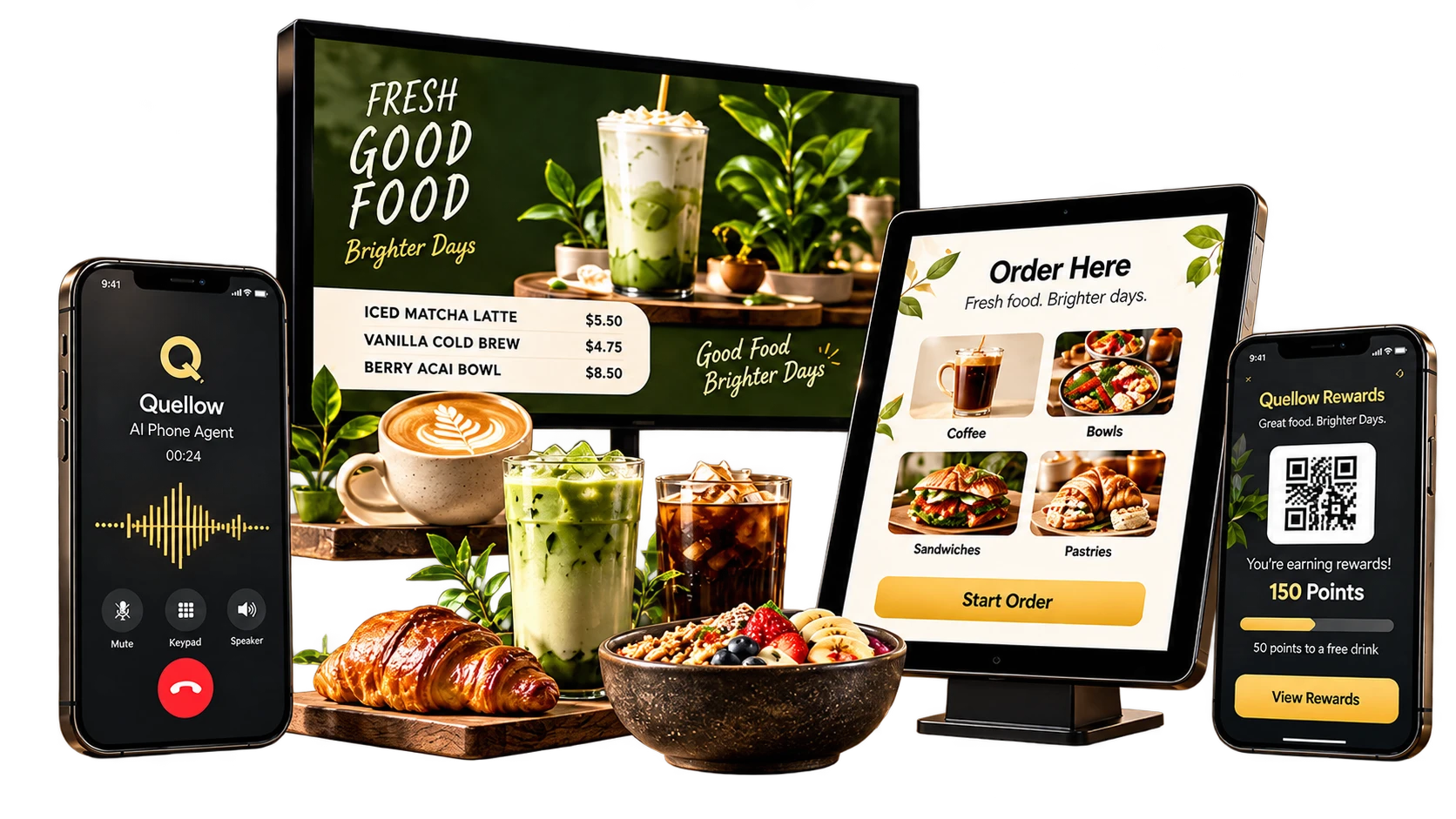
- Offer loyalty points on direct orders through your rewards program.
- Use your menu boards to promote the direct link.
- Add the link to your social profiles.
Avoid messaging customers inside third-party bags in ways that break your agreement with the app, so check your terms first.
What a good direct ordering setup needs
A direct channel should be as easy as the apps. Look for:
- A live menu that reflects sold-out items
- Realistic pickup times
- Orders that reach your kitchen with no extra tablet
- Fast checkout on a phone
- Separate prices or deals per location, if you have more than one
Quellow online ordering sends web orders into your register queue and kitchen display, and Rush Control keeps pickup times honest when you're busy.
A balanced strategy
Most restaurants don't need to choose. Keep the apps for reach, and steadily move repeat customers to direct ordering. Track the share of orders coming through your own channel. As that number rises, you will have more margin and a customer list that belongs to you.