Quellow
The phone tends to ring at the worst moment: during a lunch rush, while a stylist has both hands in someone's hair, or when a contractor is on a ladder. Those calls are often the most valuable contact you get all day, because the person is ready to buy right now.
Work out your own number
Industry figures vary too much to be useful for your business, so calculate your own. You need three numbers:
- Missed calls per week. Your phone provider's log will show them, or count for one week.
- The share that were real customers. Remove spam and existing suppliers.
- Your average sale. Use a typical order, appointment or job.
Then multiply them. As an illustration only, suppose a salon misses 20 calls a week. If half are genuine customers, one in three would have booked, and an appointment is worth $80:
- 20 missed calls × 50% genuine = 10 real customers
- 10 × one in three = about 3 lost bookings
- 3 × $80 = $240 a week, or roughly $12,000 a year
Your figures will differ, so try this with your own log. And that number leaves out what those customers would have spent on repeat visits.
Why voicemail and call forwarding don't solve it
Many callers won't leave a message. They search for the next option and call it instead. Forwarding to your cell only moves the interruption, and a traditional answering service can take a message but usually can't take an order, check your calendar or quote from your live menu.
What an AI phone agent actually does
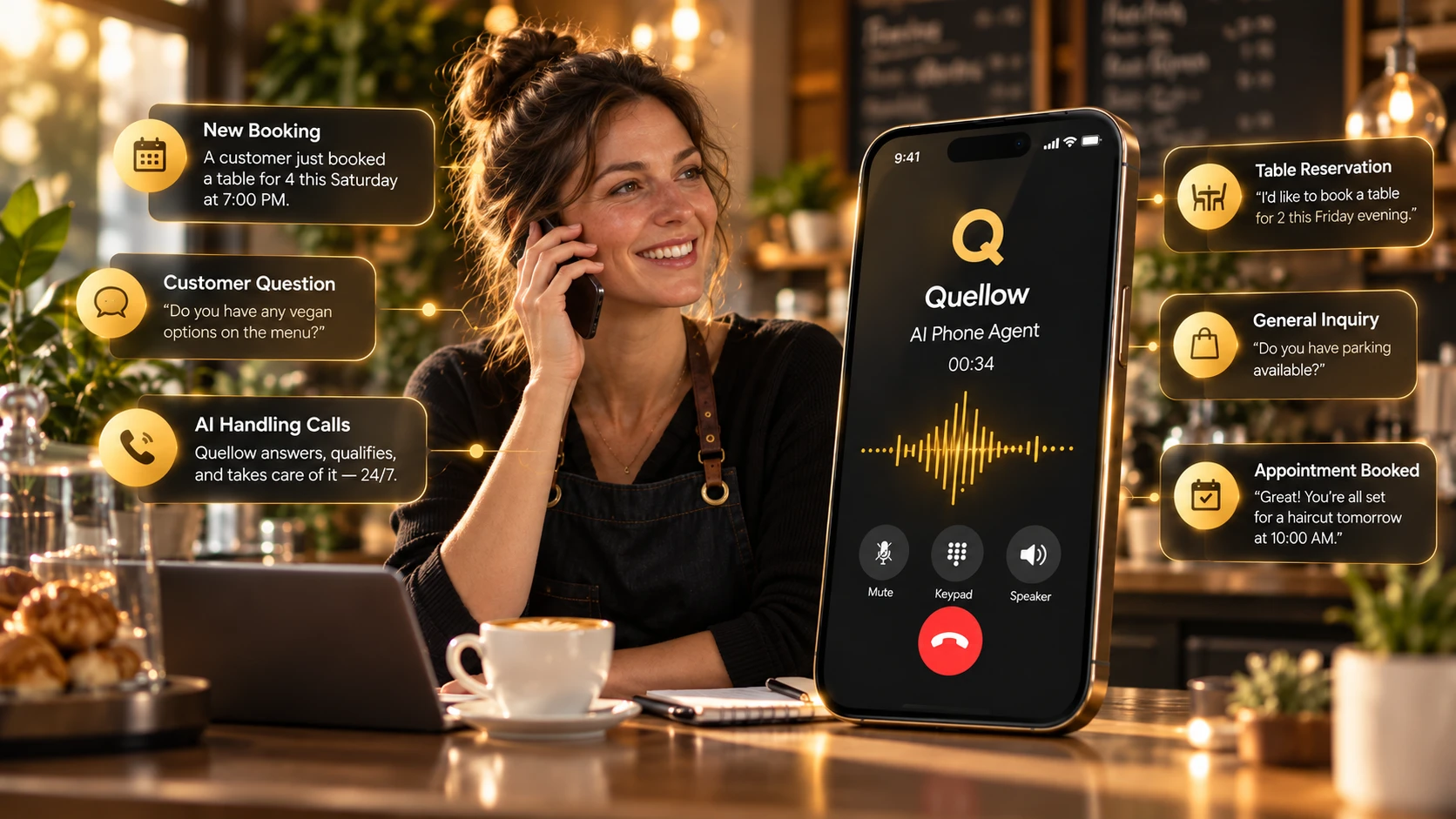
A modern AI phone agent holds a natural conversation and acts on it. Quellow's agent can:
- Answer around the clock, including during rushes
- Take orders with sizes and modifiers from your live menu
- Book, change and cancel appointments
- Answer questions about hours, parking, services and prices
- Capture leads and pass them to your CRM
Because it shares your catalog, it won't offer an item that's sold out or quote last month's price.

It learns from your calls
A new employee gets better by remembering what customers ask. Quellow's phone agent does something similar. Call Coach finds the questions it couldn't answer and turns them into short items you can teach. Corrections wait for your approval, and if you remove something, it isn't relearned.
Won't customers hate talking to AI?
People dislike slow, confusing phone menus. A voice that answers immediately and solves the problem is a different experience. It's still sensible to be transparent, to offer a route to a person for anything sensitive, and to review your call logs in the first weeks.
When to keep a human on the line
AI handles routine calls well. Complaints, complicated quotes and medical concerns deserve a person. A good setup answers everything, solves what it can and hands over the rest.
Getting started
Setting up takes three steps: connect or forward your number, let the agent learn your menu and policies, and try a few test calls yourself. Start with after-hours calls and overflow if you're cautious, then widen it once you've read the transcripts.